Depop, Vinted and Poshmark: Listing Photos That Actually Sell
Depop, Vinted and Poshmark reward honest, clear photos over studio gloss. A phone-only shot list, plus exactly when to remove the background on a resale listing and when to leave it alone.
By Novus Stream Solutions Editorial Team · Part of the Publishing and marketplace requirements topic cluster
A £4 charity-shop tee and a £180 designer coat too often get the same listing photo: shot on a crumpled duvet, lit by the ceiling bulb, one soft frame, no measurements. On Depop, Vinted and Poshmark that single photo is the whole shop window. The buyer can't feel the fabric, hold it up to the light or check the seams, so your pictures have to do every job at once. Sell the item, and prove its condition.
That second job is the one most sellers skip, and it's the one that separates listings that sell from listings that sit. Resale is not retail. A catalogue shopper wants aspiration; a resale buyer wants to know exactly what turns up in the parcel. Over-polish a £6 pre-loved top with a flawless white cutout and a drop shadow and you don't look professional. You look like a dropshipper, or worse. Authenticity and clarity outsell gloss every time here.
Shoot for two things: desire and proof
Every good resale listing balances two kinds of photo.
Desire shots make someone want the item. The cover image, a flat-lay, an on-body picture showing how it drapes.
Proof shots answer the questions a careful buyer asks before spending: the label, the true colour, the measurements, and any flaw. Get both and you head off the "is this genuine?" and "does it really look like that?" messages before they ever arrive.
A shot list for one listing
All three apps let you upload a stack of photos, not one or two, so use the slots. Here's an order that works for most clothing.
- The cover shot. The whole garment, front-on, filling the frame. This is your thumbnail in the feed, so shoot it clean and well-lit. On Depop especially the grid is square, so keep the item centred with breathing room around it and nothing important near the edges.
- The on-body or full-length shot. Worn, or on a hanger against a plain door. This shows fit, length and drape, things a flat photo hides. Leave the background exactly as it is here (more on why below).
- The brand and size label. A close, sharp crop of the neck or waistband tag. Buyers search by brand and size; showing the label proves both.
- The composition and care label. "100% wool" or "viscose blend" matters for buyers with allergies, budgets or laundry standards. One quick close-up saves a dozen questions.
- Condition close-ups. Photograph any flaw honestly and in focus: pilling under the arms, a faded print, a small mark, a missing button, a re-stitched hem. A flaw you've clearly photographed is a flaw the buyer accepted; a flaw they find at home is a return or a bad rating.
- A detail or texture shot. Hardware, buttons, a print close-up, the weave of a knit. This is where an item earns its price.
- Measurements. Lay the garment flat and photograph it with a tape measure across the chest, waist and length, or note the numbers in the description. Sizing drifts wildly across decades and brands, and measurements prevent the single most common resale dispute.
You won't need all seven for a plain white tee. A vintage leather jacket deserves every one.
When a clean background helps, and when it quietly hurts
Removing the background is a genuinely useful move, but only in the right slot. The trick is knowing which.
Where it helps
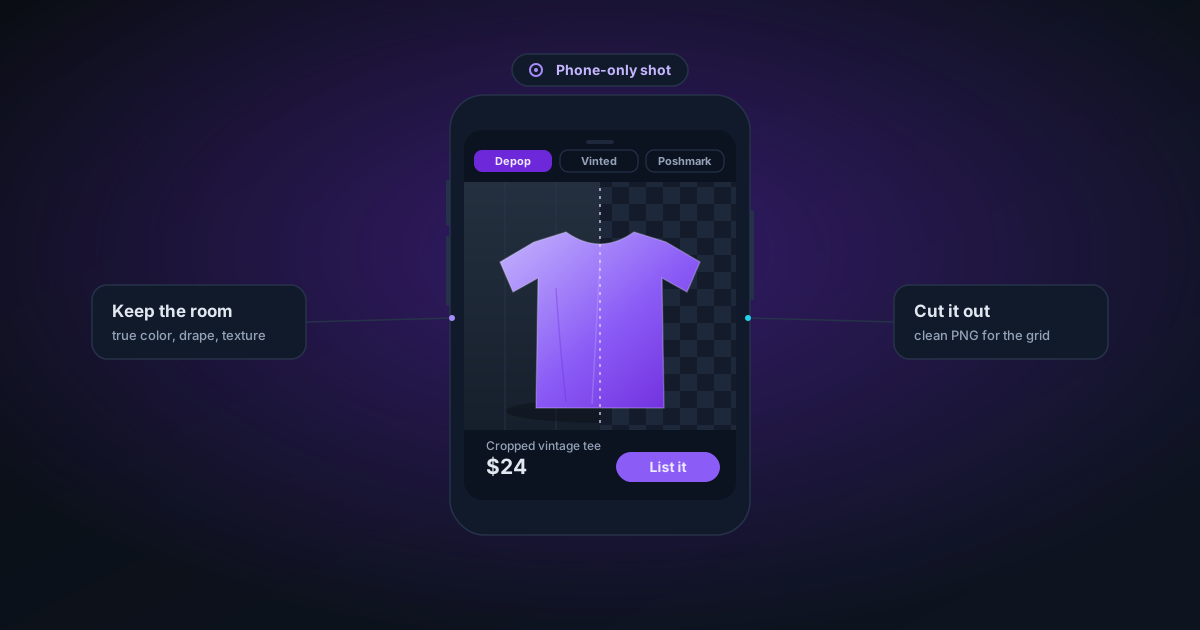
- The cover shot. If your only clear photo is on a busy carpet or a cluttered bed, cutting the item out and dropping it onto plain white or a soft neutral makes the thumbnail read instantly in a crowded feed. Run it through the background remover and place it on a clean colour.
- Flat-lays. A row of listings that all share the same calm background gives your shop a coherent, considered look, worth having if you sell in volume.
- Killing distraction. A stray charging cable, a pet wandering through, a reflection of you in a mirror. Sometimes the cleanest fix is to remove the lot.
Where it hurts
- On-body shots. Cut yourself out from behind a garment and the result looks uncanny, a floating top with smeared edges where your arm used to be. On-body pictures sell fit and realness; a background swap destroys both.
- Condition shots. This is the important one. Background removal works by deciding what's item and what isn't, and near a fuzzy or damaged edge it guesses. It can smooth over the exact pill, fray or mark you're trying to document, and a buyer who spots an obviously edited condition photo stops trusting the whole listing. Leave proof shots untouched.
- Fuzzy, sheer or wispy items. Faux fur, mohair, lace, tulle, marabou trim, anything with hair-like edges. Automatic cutouts leave halos and chewed outlines on these. Often a plain in-shot background, hung against a white door, beats a rough extraction.
Be honest with yourself on that last point. If the cutout comes out with a ragged edge, don't ship it. A clean photo on a messy-but-neutral background sells better than a bad cutout every time.
Editing on your phone, in two minutes
You do not need a laptop or a subscription. The whole thing runs in your phone's browser, and nothing you shoot ever leaves the device.
- Shoot in daylight. Stand near a window during the day, not under a warm ceiling bulb. Daylight gives you true colour, and true colour is the single biggest thing you can do to prevent "it looked different in the photos" complaints.
- Straighten and crop. Level the horizon, crop close, and keep the cover shot safe for a square. The image editor handles rotate, crop and a brightness or white-balance nudge in the browser.
- Adjust lightly. Lift the exposure if it's dim; neutralise a colour cast so white reads white. Stop there. Don't push a dusky pink into hot fuchsia. You'll be the one dealing with the return.
- Remove the background only where it earns it. Cover shot and flat-lays, yes. Condition and on-body shots, never.
- Rescue a soft crop, sparingly. If you've cropped hard into a label and it's gone mushy, the upscaler can firm it up, but shooting the detail close in the first place always beats fixing it afterwards.
This is not the Etsy playbook
If you're selling handmade or brand-new goods rather than pre-loved, most of this inverts: styled sets, props, consistent studio lighting and aspirational staging are the whole point, and there's no condition to disclose. That's a different craft. Our Etsy photo guide for handmade sellers covers it. Resale is the opposite discipline: less styling, more evidence.
Quick checklist before you hit publish
- Cover shot fills the frame and works as a square
- One on-body or hung shot for fit: background left alone
- Brand, size and composition labels are sharp and readable
- Every flaw photographed honestly and unedited
- Colour matches the real item, checked in daylight
- Measurements shown or written into the description
- Background removed only on the cover or flat-lays, and the edges are clean
Get the proof shots right and you'll spend far less time answering questions and far more time posting parcels. The buyer who can see exactly what they're getting is the one who doesn't haggle, doesn't message twice, and doesn't open a return.
Applies to NSS Background Remover v1.9.0 — the release that was current when this article was published.
Was this article helpful?
Your answer is saved in this browser only. This control makes no network request and does not send the answer to an NSS feedback endpoint.